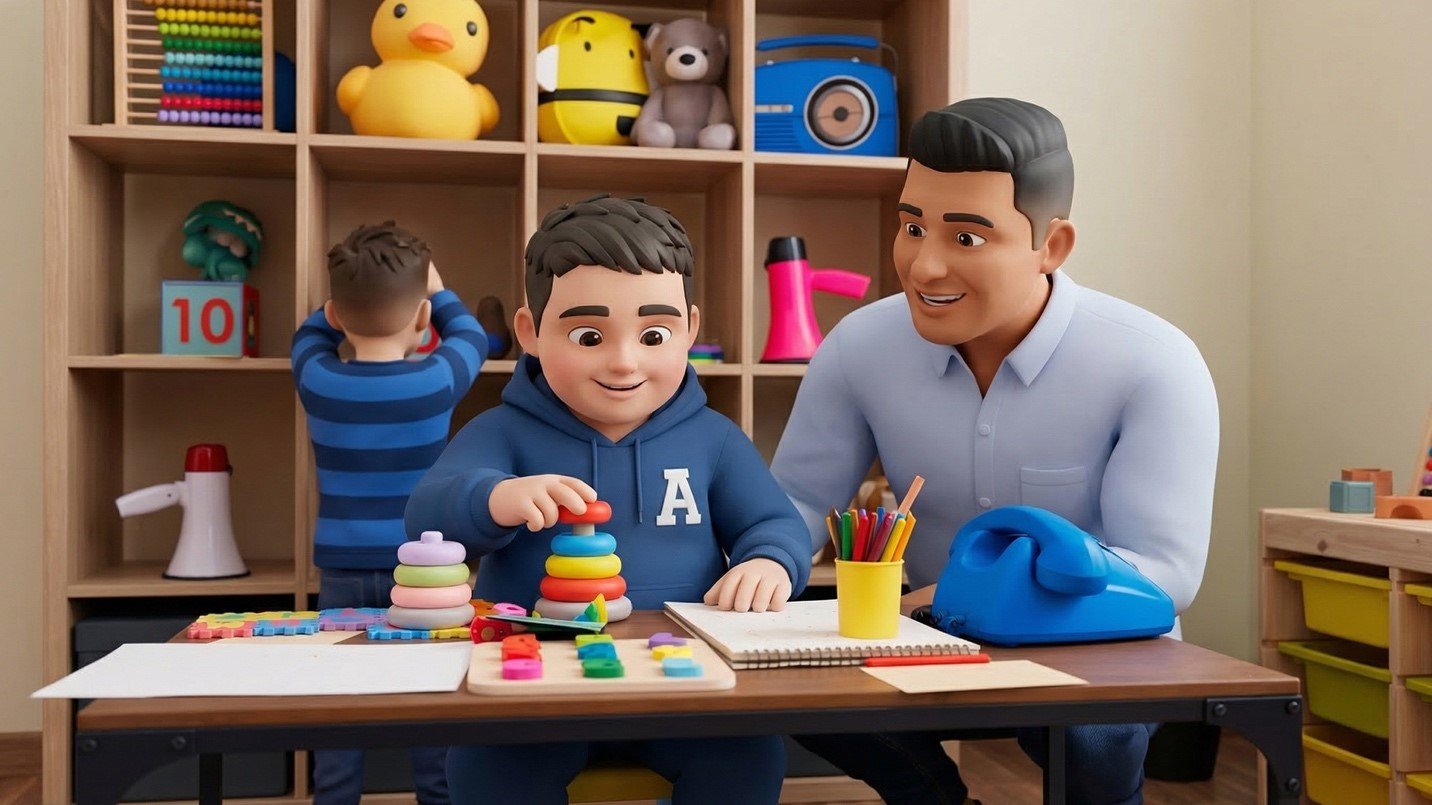
ABA Therapy Guide
For children diagnosed with Autism Spectrum Disorder (ASD), early education is one of the most critical factors in their developmental journey. Scientific research shows that educational programs started at the right time can significantly improve children's communication, social skills, and independent living abilities.
In particular, ABA therapy (Applied Behavior Analysis) is considered one of the most effective and scientifically supported methods worldwide for supporting the development of children with autism.
So why is early intervention so important?
How can ABA therapy truly change a child's life?
In this guide, you will find the answers to all these questions.
Why Is Early Education So Important in Autism?
In children with autism, brain development is especially very rapid between the ages of 0–6. This period offers a critical window of opportunity for learning and behavioral development.
With early education, children can:
- Learn to communicate
- Develop social interaction skills
- Reduce problem behaviors
- Gain daily living skills
- Adapt more easily to academic learning
According to experts, early intervention significantly increases the likelihood that children will live more independent lives in the future.
For this reason, many experts agree on the following statement:
“Early intervention in autism is one of the most powerful tools that can change a child's future.”
What Is ABA Therapy?
ABA Therapy (Applied Behavior Analysis) is an educational method based on behavioral science. Its goal is to support a child’s development and systematically increase learning.
ABA therapy is based on the following principles:
- Analyzing behaviors
- Reinforcing positive behaviors
- Breaking learning into small steps
- Ensuring lasting learning through repetition and practice
Through this method, children can:
- Improve communication skills
- Learn to interact socially
- Develop daily living skills
- Reduce problem behaviors
Today, ABA therapy is supported as a scientific method by the American Psychological Association, the World Health Organization, and many academic institutions.
Which Skills Does ABA Therapy Develop?
ABA-based education programs help children develop in many different areas.
Communication Skills
- Speech development
- Expressing needs and requests
- Answering questions
Social Skills
- Making eye contact
- Playing games
- Interacting with peers
Daily Living Skills
- Dressing
- Eating
- Toilet training
Academic Readiness
- Improving attention
- Imitation skills
- Problem-solving
Over time, these skills strengthen the child’s independent living abilities.
When Should ABA Therapy Start?
Experts recommend starting education as soon as autism symptoms are noticed.
The typical age range to begin ABA therapy is:
18 months – 6 years old
However, educational programs can still provide significant benefits at older ages.
Children who start early often show faster improvement in:
- Language development
- Social communication
- Behavior regulation
- Learning capacity
How Is ABA Therapy Applied?
ABA education is planned individually for each child.
When designing a program, the following factors are evaluated:
- The child’s developmental level
- Communication skills
- Level of social interaction
- Problem behaviors
- Family needs
The following methods are commonly used during the education process:
- one-on-one training
- play-based teaching
- natural teaching techniques
- behavior analysis
Family involvement is also very important during this process. When families participate actively, the skills learned during therapy are more easily transferred into daily life.
Most Important Advice for Families
The role of families in the development of children with autism is extremely important.
Some key recommendations from experts include:
✔ Get an early evaluation
✔ Do not delay the education process
✔ Work closely with specialists
✔ Support learned skills at home
✔ Be patient and consistent
It should be remembered that every child is different and the development process progresses individually.