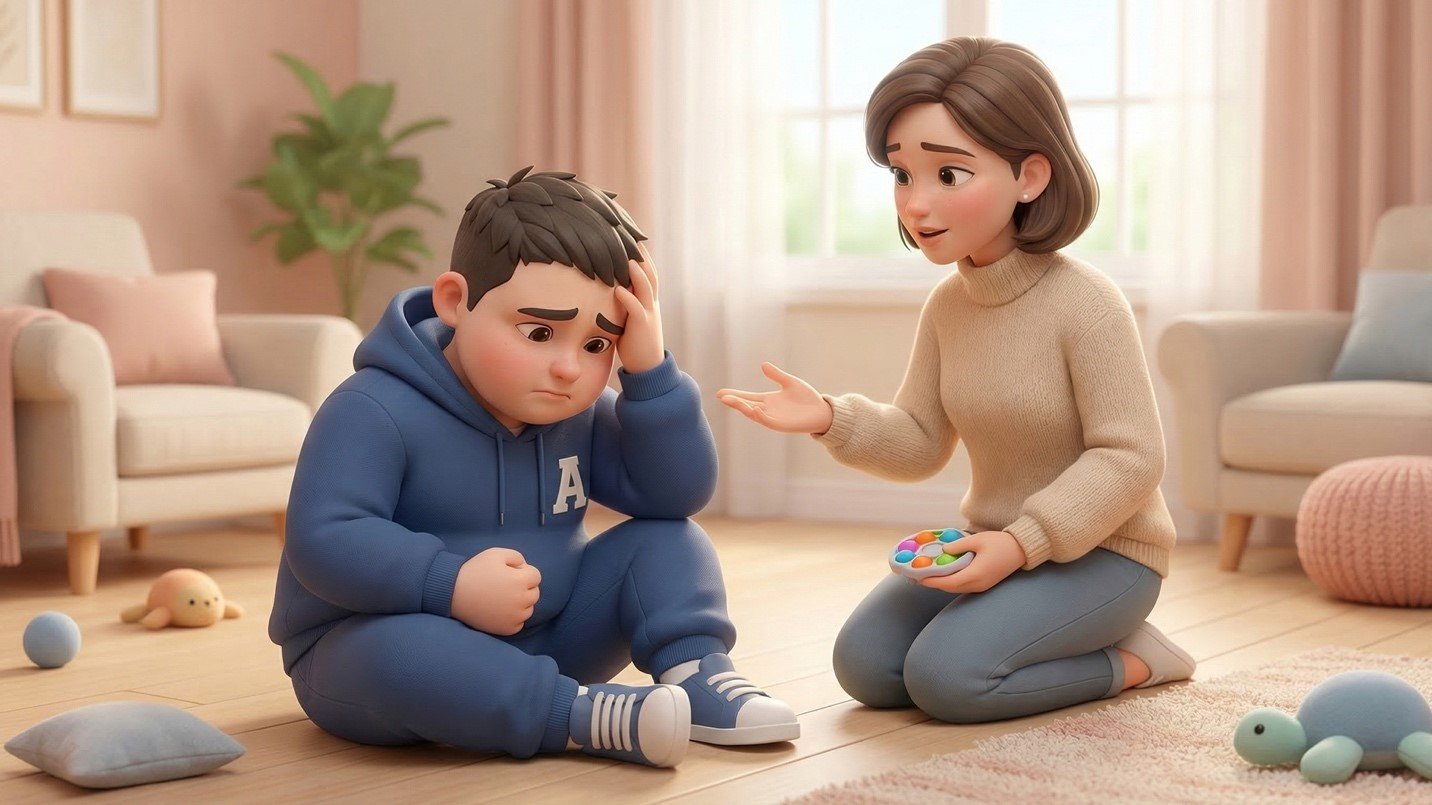
Effective Communication Guide for Families
Communicating with autistic children can sometimes be challenging for families. This is because most autistic children show different development in social communication and language skills. However, a strong communication bond can be established with children when the right methods are used.
The most important point when communicating with autistic children is to try to understand their world and to adapt the communication to their pace. This article describes effective ways to communicate with autistic children and practical methods that families can apply.- They may have difficulty making eye contact
- Their speech development may be delayed
- They may have difficulty expressing their feelings
- They may interpret what is said differently
This does not mean that the child does not want to communicate. Often their ways of communicating are different.
7 Effective Ways to Communicate with Autistic Children
1️⃣ Use Simple and Clear Sentences
Use short and understandable expressions instead of long and complex sentences.
Example:
“Can you bring the ball?” Instead of
“Bring the ball.”
2️⃣ Utilize Visual Aids
Children with autism can understand visual information more easily.
Tools that can be used:
- picture cards
- visual programs
- signs
3️⃣ Don't Force Eye Contact
Making eye contact can be uncomfortable for some children. Instead of forcing the child, encouraging them gradually is more effective.
4️⃣Use the Child's Interests
If the child is interested in a toy, you can start the communication through that toy.
This method makes communication more natural.
5️⃣Give Them Time to Respond
It may sometimes take longer for autistic children to process information.
Waiting 10-15 seconds after saying something can facilitate communication.
6️⃣Communicate Through Play
Play, for autistic children It is one of the most powerful ways to communicate with children.
During play, the child:
- initiates communication
- learns to wait their turn
- develops social skills
7️⃣Reward Small Communication Initiatives
It is important to notice and support when the child looks at you, points, or makes a sound.
In this way, the child learns that communication works.
Things to Avoid When Communicating with Autistic Children
Some behaviors can make communication difficult.
For example:
- constantly asking questions
- forcing the child
- speaking loudly talking
- acting impatiently
The most effective communication method is patience and understanding.
The Role of the Family in Communication
The communication skills of autistic children also develop in the home environment.
Families can create communication opportunities in daily life.
For example:
- while preparing food
- while playing games
- while reading a book
These small moments can create great development opportunities.
Frequently Asked Questions
Can autistic children communicate?
Yes. With the right education and support, communication skills can improve.
Does talking to autistic children help?
Yes. Constant communication supports language development.
Why do autistic children not want to communicate?
Most of the time, they struggle not because they don't want to, but because they don't know how to communicate.